

Vic-sur-Cère
Auvergne-Rhône-Alpes, Ain
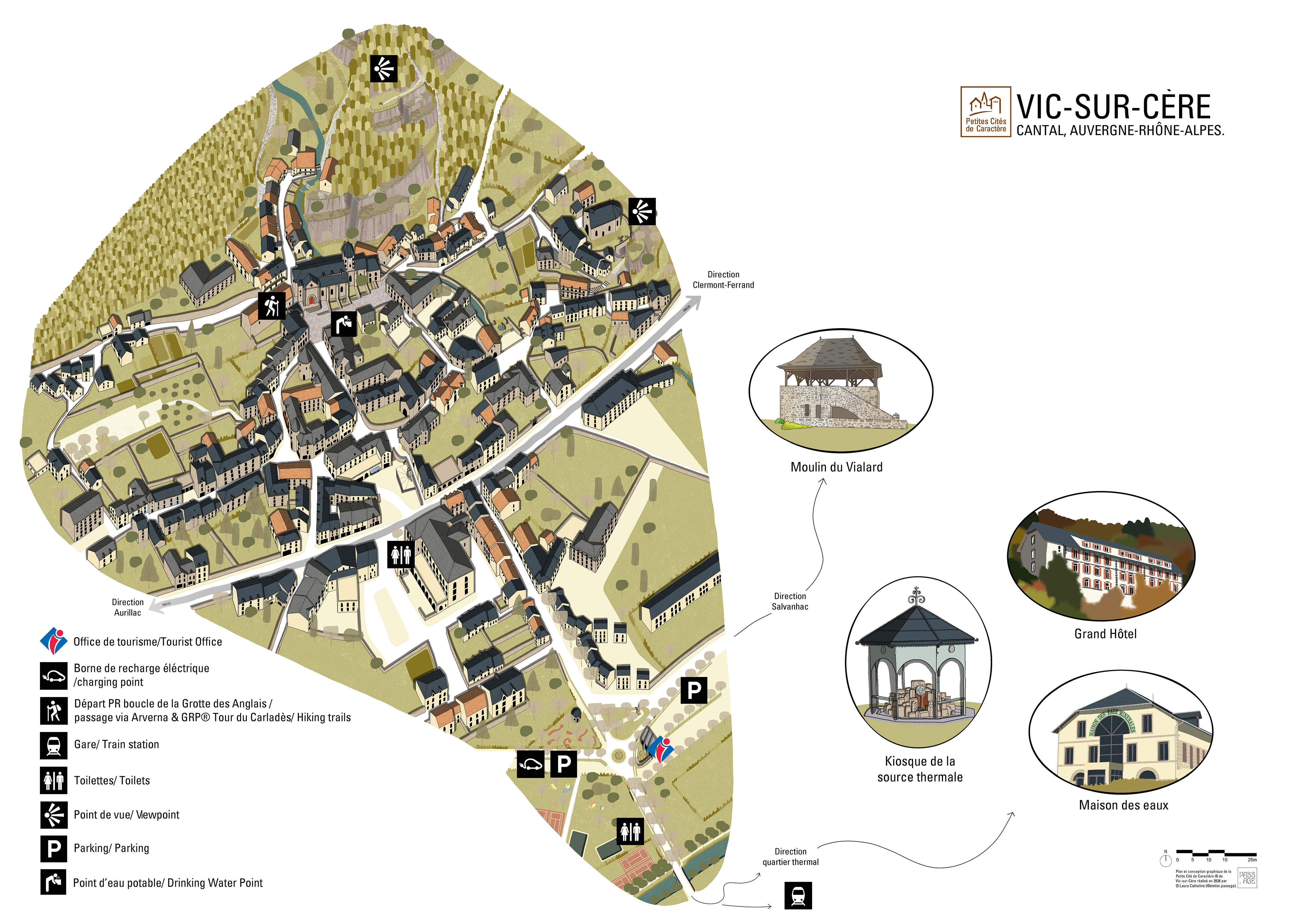
Vic-sur-Cère, Petite Cité de Caractère®
Vic-sur-Cère is designated Petite Cité de Caractère®. As such, it forms part of a national project aimed at promoting and protecting the architectural heritage of little towns across France. Through tourism, the initiative encourages visitors to embrace the local culture by strolling through the streets, learning about the history of the area, taking part in local events, and discovering the local way of life. In Cantal, there are several Petite Cité de Caractère® little towns to discover. The digital map will help you navigate each of them and highlight their main attractions.
Vic, from the Political Town to the Spa Town
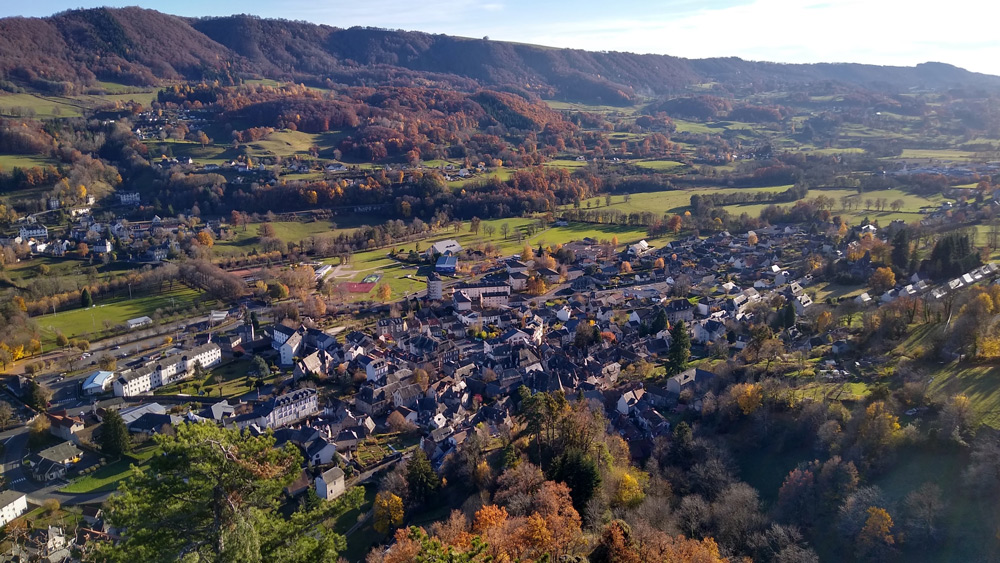
The town began to develop in the 11th century, centred on a motte-and-bailey castle overlooking the town, and subsequently expanded to become a town of notables with the establishment of the bailiwick (court of appeal) in the 15th century. Vic was one of the administrative centres of the Carladès region. Following the Treaty of Péronne, Louis XIII ceded the Carladès to the Princes of Monaco (the Grimaldi family) in 1643, and Vic became its political capital. It returned to French rule after the French Revolution. At the end of the 19th century, Vic’s mineral spring, known since Gallo-Roman times, led to the development of a spa industry and contributed greatly to the town’s expansion and reputation. Indeed, the arrival of the railway and the growth of the spa industry encouraged the town’s expansion along the left bank, with the creation of a district of seasonal residences, as well as the development of facilities along the banks of the Cère.
Vic, Spa Town at the Foot of Volcanoes
Vic-sur-Cère is situated at an altitude of 680 metres on the south-western slope of the Cantal Mountains, within Europe’s largest stratovolcano. The town has developed at the bottom of the Cère valley, set in a picturesque, green mountainous landscape, fed by numerous springs and watercourses. “The land of green, grey and blue” has many secrets to reveal. In Vic, water is ever-present and has shaped the urban landscape. The long-standing presence of iron-rich mineral springs, known to the Celts and later to the Gallo-Romans (Vicus ad Ceram or ‘village on the Cère’ in Latin), contributed to the town’s development and the creation of a fully-fledged spa resort.
Castel Viel
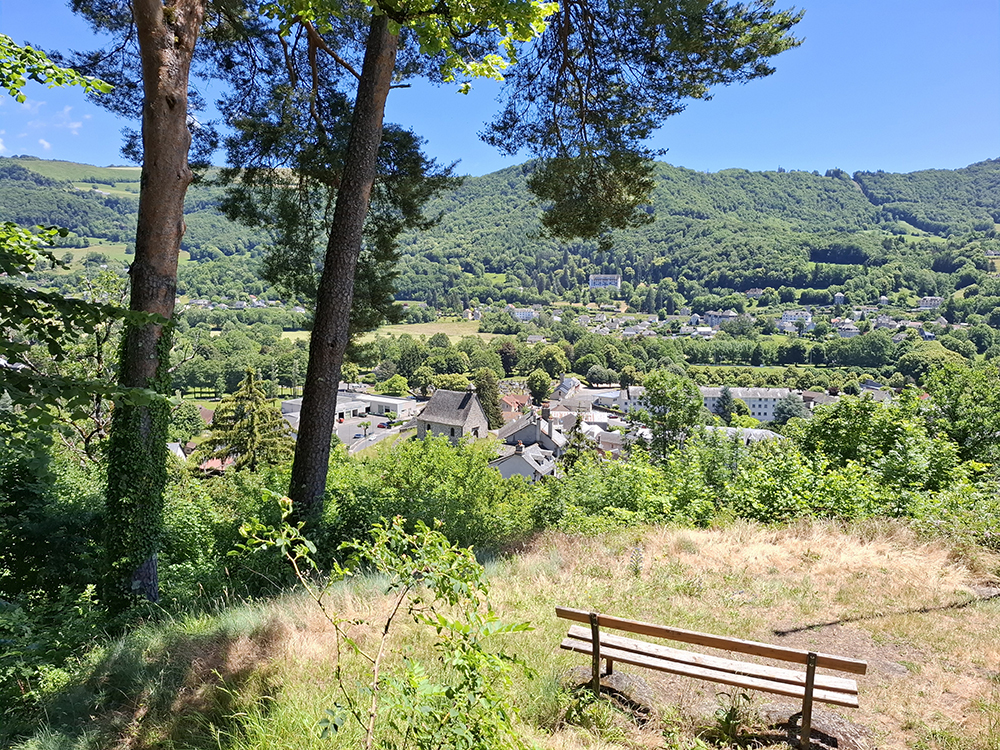
In the 11th century, the town was established at the base of Castel Viel (“Old Castle” in Occitan), a motte-and-bailey castle overlooking the town, whose lords were vassals of the Viscounts of Carlat. The motte, consisting of a wooden castle, allowed locals to watch over the valley from the rocky outcrop. It is said that Pierre de Vic, ‘the monk of Montaudon’, was born here in the 12th century; he was a troubadour who led a life of feasting at the court of Alfonso of Aragon, Viscount of Carlat. In 1379, Gascon troops, allied with England during the Hundred Years’ War, set fire to the town, destroying the church and the Castel Viel. Today, no remains of the castle survive, but the site offers an exceptional panoramic view.
Cap del Lioc Street
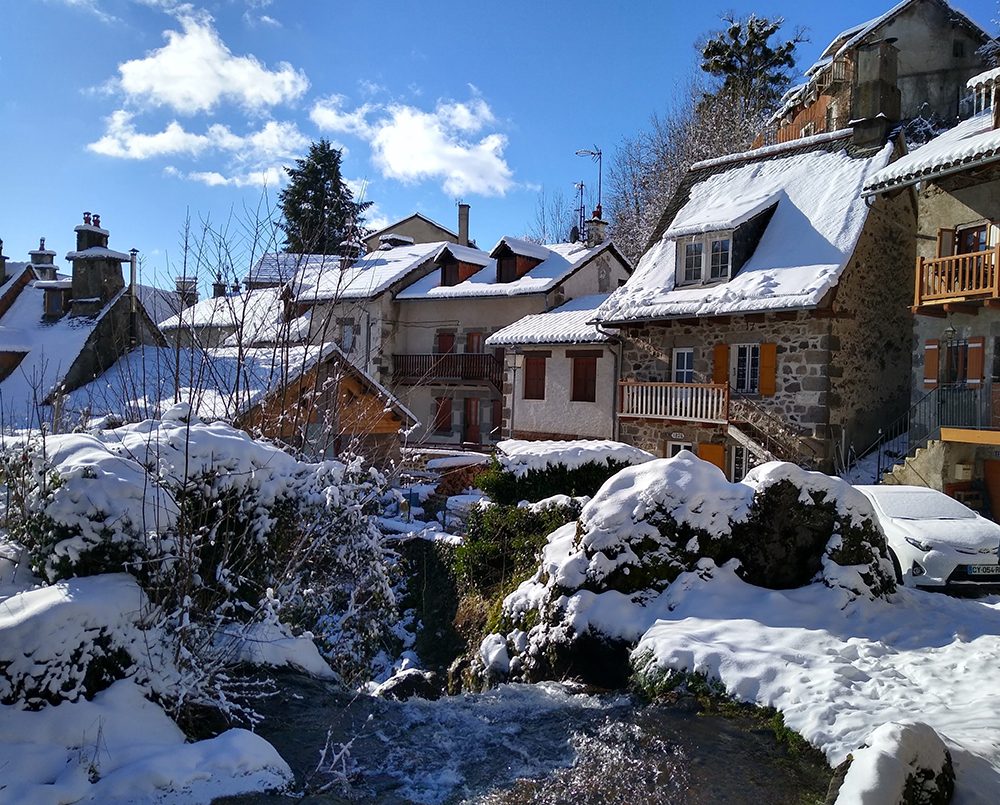
Below the Castel Viel, the street known as ‘Cap del Lioc’ is the oldest in the town. In Occitan, ‘lo cap’ means “the summit” and ‘del lioc’ means “of the place”, hence the highest point in Vic. Along the Iraliot stream, a cluster of small terraced houses was built in the typical architectural style of the Carladès region. The ground floor served as a storeroom or shelter for livestock. The first floor, accessible via an external staircase and a wooden covered balcony, was the living area.
Saint Peter’s Church
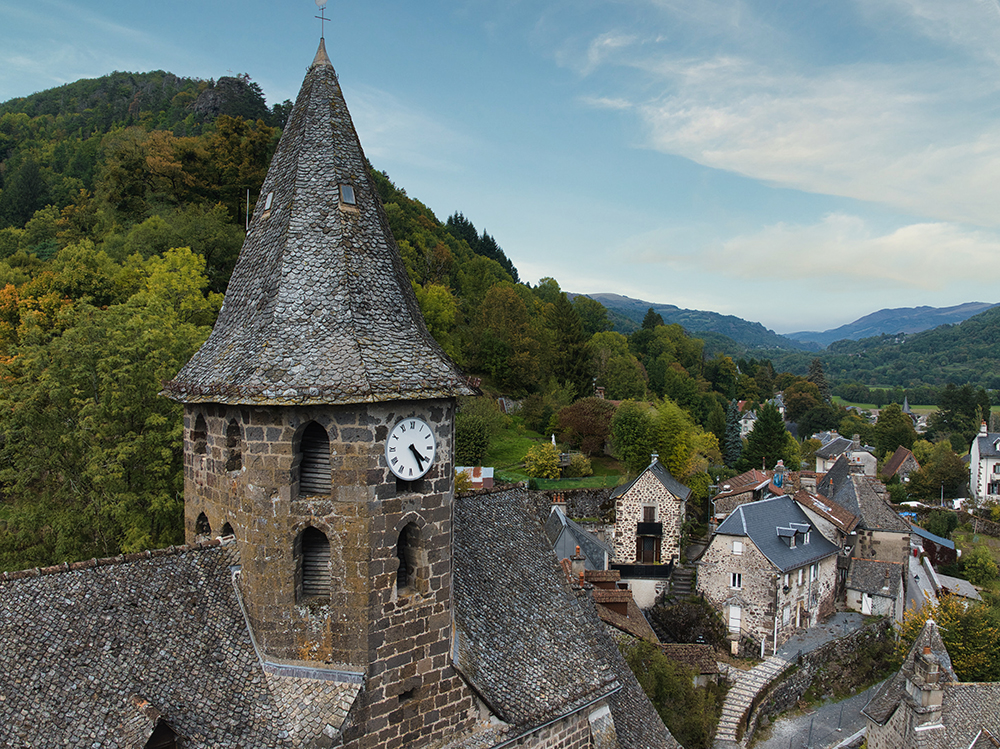
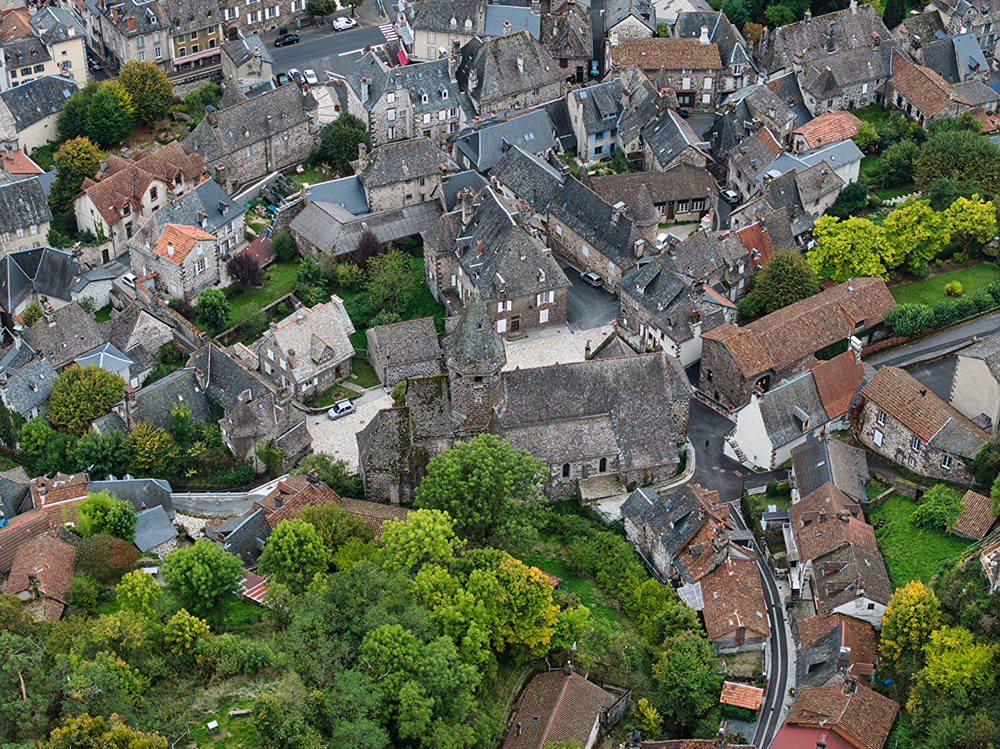
Listed as a Historic Monument, the 11th-century church has been remodelled several times. Destroyed in 1265, it was rebuilt in the southern Auvergne Gothic style: sober and massive, with a wide nave, minimal sculpted decoration, thick walls, and influenced by southern architecture. It was damaged in the 14th century during the Hundred Years’ War, and again in the 16th century during the French Wars of Religion. Successive remodelings from the 18th to the 20th century gave it its present appearance. On the south façade, 56 carved Romanesque-style modillions adorn the cornices (human or animal heads, plant motifs), bearing witness to the primitive building.
Bailiwick House and Notable House
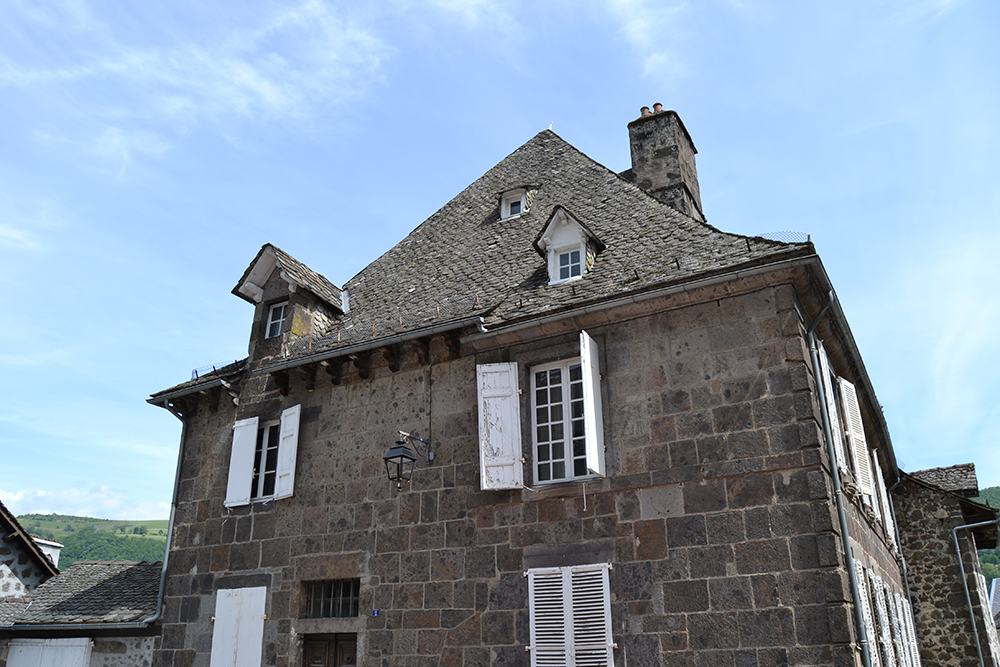
In 1561, under Charles IX, Vic became a court town with a “Bailliage d’Appeaux” (“Bailliwick of Appeal”, a sort of Court of Appeal). The bailiff exercised judicial, military and financial functions there on behalf of the king. The bailiwick’s buildings comprised a main building, a courtroom and a prison which remained in use until 1825. Directly opposite, the 15th-century mansion of a notable figure features beautiful window frames and retains a vaulted room with a four-ribbed vault resting on an octagonal pillar. It is thought to have served as the bailiff’s residence and as a chapel for the Huguenots. Thanks to the bailiwick, the town flourished and fine residences were built by the bailiwick's bourgeoisie of notables, mainly in volcanic rock (breccia and andesite), lending the old town centre its dark hue.
Knight Des Huttes’ House
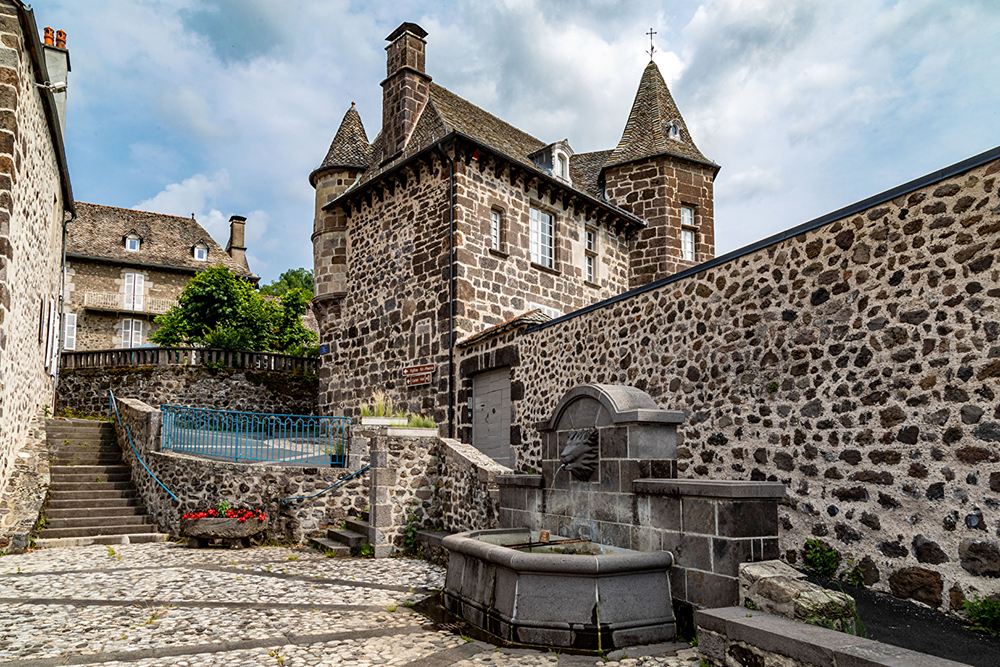
Listed as a Historic Monument, it was once the residence of the “president of the Court of Appeal” (président des juges d’appeaux), and later that of the Pagès des Huttes family, who by 1616 already owned the seigneury of the hamlet of Les Huttes in Polminhac. Jean-Baptiste Pagès des Huttes, born in Vic in 1759, entered the service of King Louis XVI at the age of 22. For having helped organise Queen Marie-Antoinette’s escape from Versailles, he was killed in the riot of 6 October 1789.
Manor, former Benedictine Convent
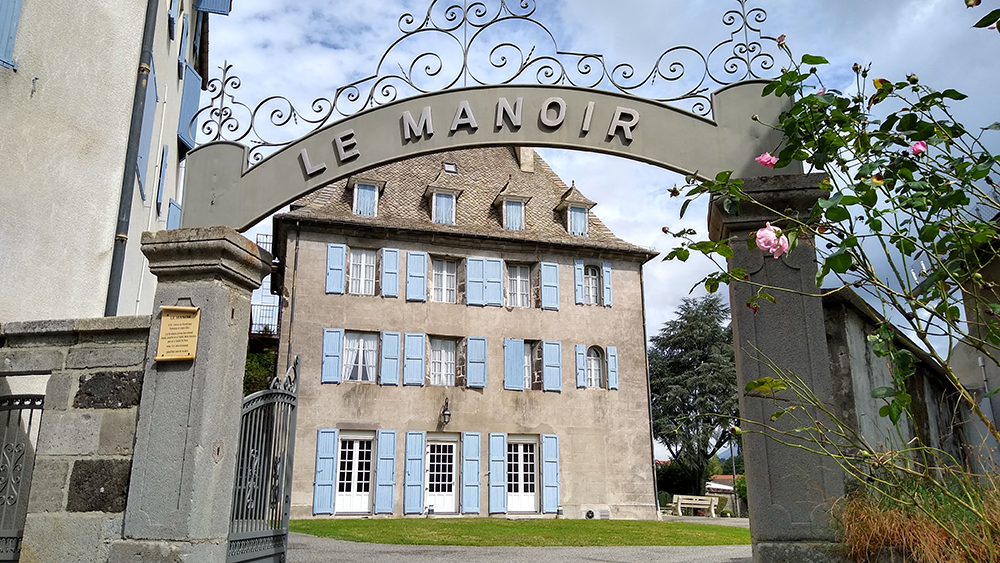
Locally known as “the manor’” (le manoir in French), this former convent was founded in 1640 by the de Pesteils family, owners of the eponymous castle in Polminhac. Under the authority of the Bishop of Saint-Flour, who delegated some of his powers to the parish priest of Vic, the convent was home to around ten cloistered nuns. They devoted themselves to the education of noble and bourgeois girls from the Cère valley until 1792. The Revolution drove the nuns out and the buildings became national property. Sold to a private individual, the abode became a renowned hotel around 1920, then a holiday centre. Today, it is an annexe of the Beauséjour Hotel.
Calvary Chapel
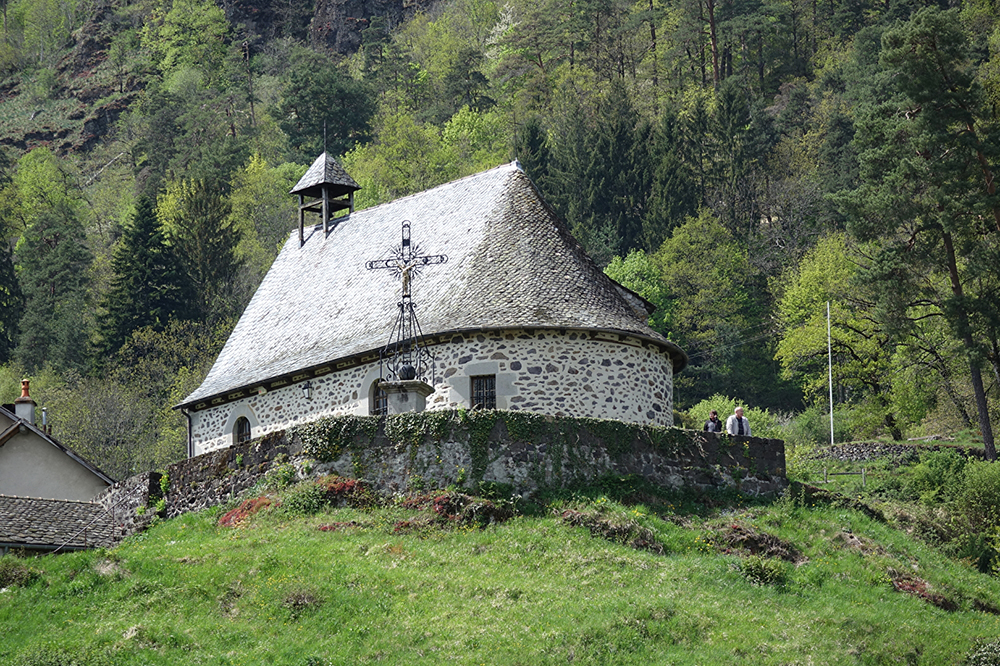
Built on a hillock in the mid-17th century, the chapel was attached to the Benedictine convent in Vic. Completely destroyed during the French Revolution, it was rebuilt from 1827 onwards, as indicated by the date engraved above the door. The building has since been deconsecrated and now hosts exhibitions during the summer.
Princes of Monaco House
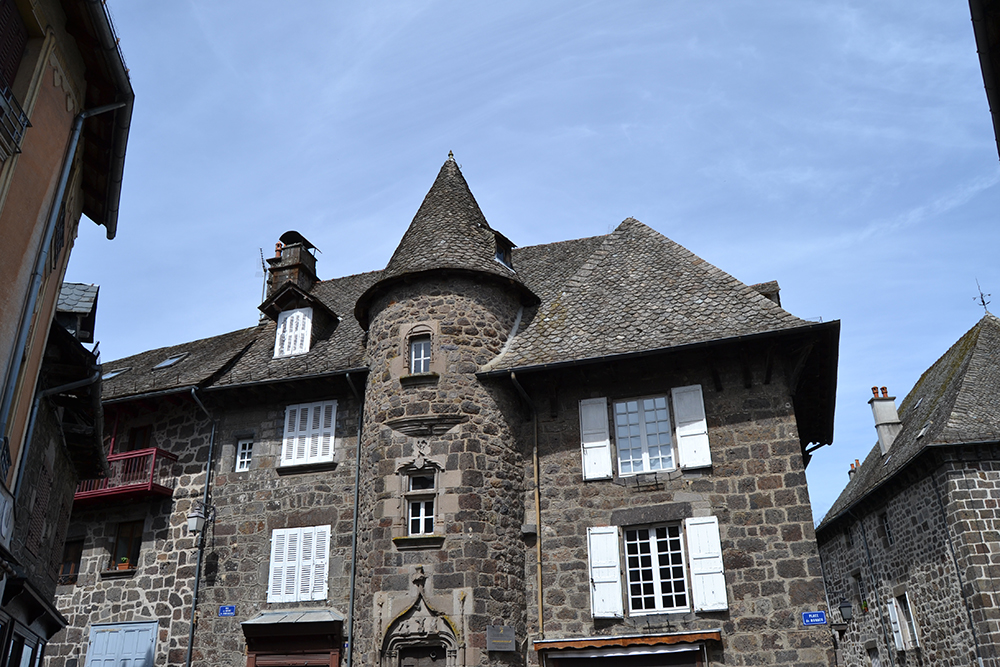
Built in the 15th century, this manor house served as the residence of Prince Louis I of Grimaldi in 1668, during his stay in Carladès to settle matters relating to the land terrier (cadastral register). Indeed, from 1643 onwards, the Viscounty, which had been elevated to the status of a County, came under the suzerainty of the Princes of Monaco. Vic en Carladès then became the political capital of this Monegasque enclave, before losing this status and becoming Vic-sur-Cère after the French Revolution. Classified as a Historic Monument, the house features a turret with an entrance door surmounted by an ogee arch and a sculpture of the Annunciation. On either side of a vase of lilies stand the kneeling Archangel Gabriel and the seated Virgin Mary, with the dove of the Holy Spirit hovering above. On the window lintel, a twisted ogee arch in high relief frames a shield with a beaded border, surmounted by a seated figure with his arms tucked beneath his knees.
Princess Gabriella Square
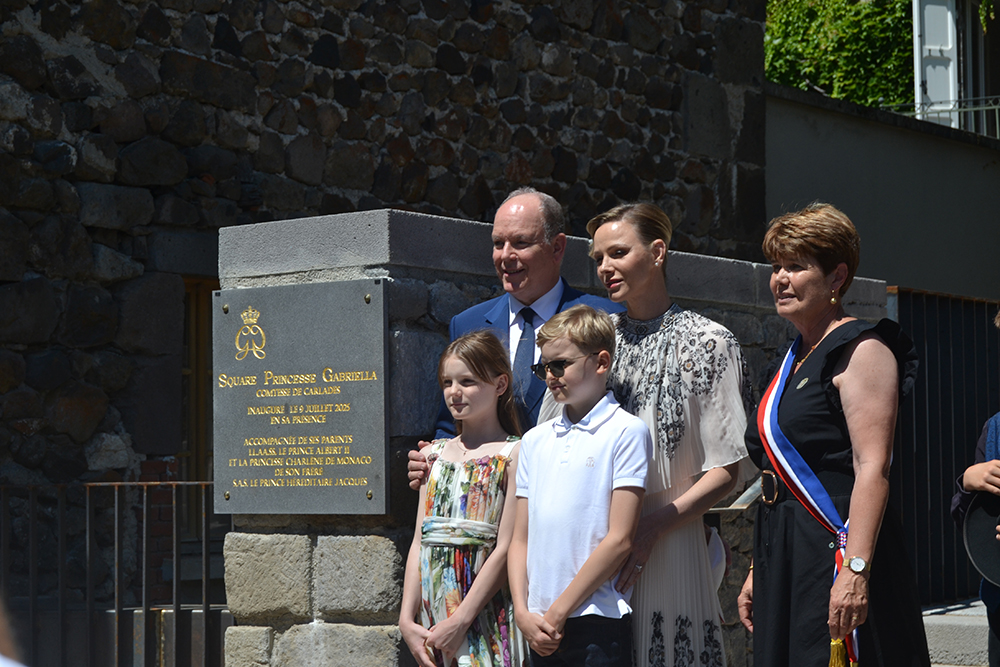
Along the banks of the Iraliot, this small square features a fountain with a richly carved central stone column: acanthus leaves, a coat of arms bearing a fleur-de-lis and a crown, and a medallion surmounted by the date 1822. It was inaugurated on 9 July 2025 in the presence of Princess Gabriella Grimaldi of Monaco, Countess of Carladès, and her family. This square illustrates the strong ties between the principality and the town: the princes of Monaco still bear the title of Count of Carladès, and Vic-sur-Cère is a member of the ‘Grimaldi Historical Sites of Monaco’ (Sites historiques Grimaldi) association.
Town Hall and Ceremonial Hall
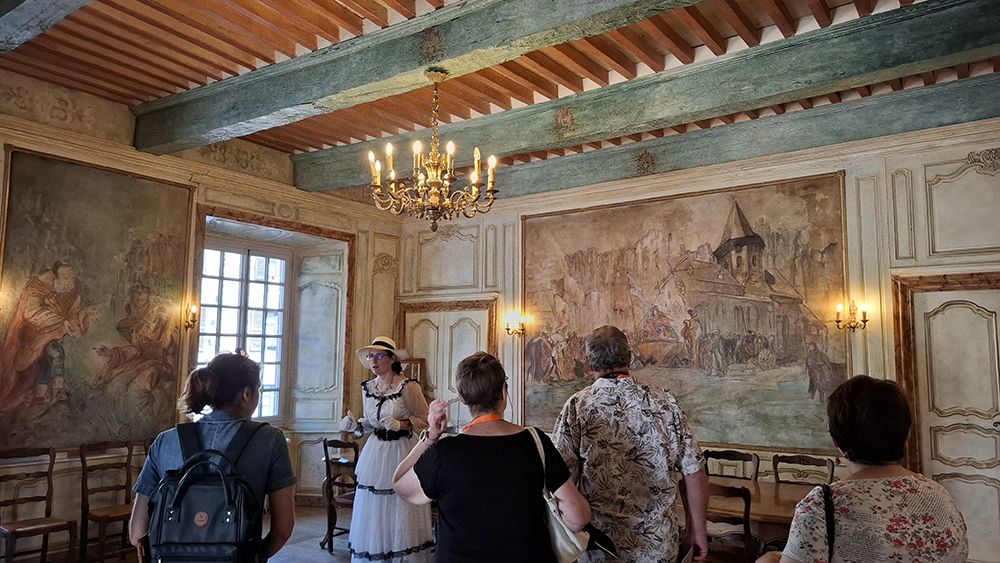
The old part of the town hall (16th century) houses the ceremony hall, with its decorated beams and walls adorned with three figurative panels created in 1993 by I. Vinet and E. Besse, depicting events from Vic’s history. The first panel depicts the scene of the granting of the Carladès to Honoré II de Grimaldi in 1643 on the church square. The second depicts Marguerite de Valois, known as ‘Queen Margot’, undergoing a course of mineral water treatment in Vic during her stay at Carlat Fortress. The third shows Queen Anne of Austria taking the waters in Vic; she is said to have come in 1637 in the hope of curing her infertility, and gave birth to Louis XIV in 1638.
Antoine Fayet Avenue
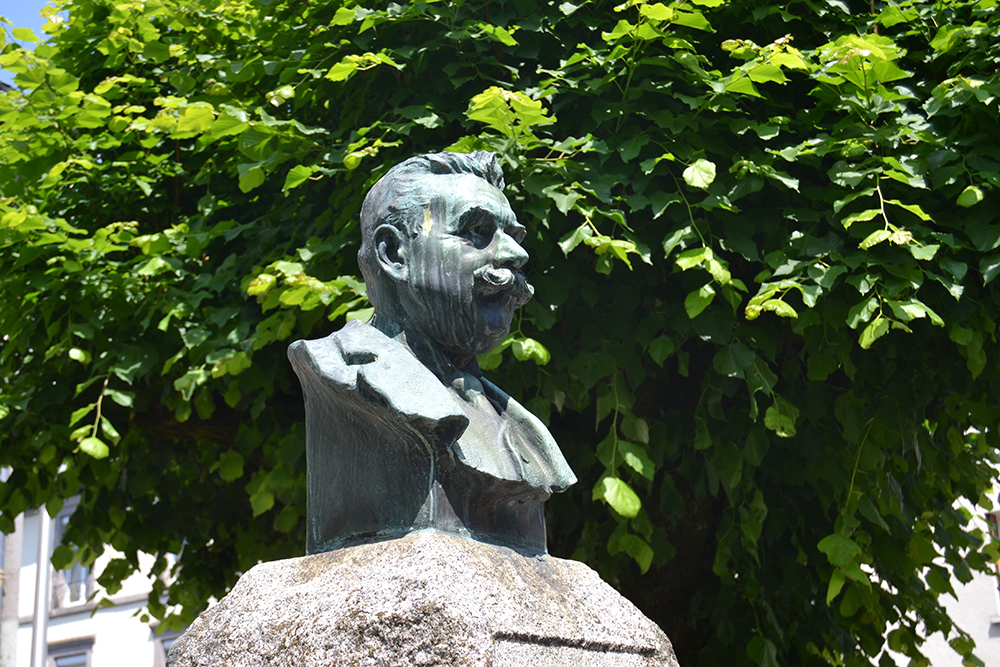
Lined with elegant villas and former Belle Époque hotels, the avenue leads to the spa district. Antoine Fayet, whose bust stands at the top of the avenue, was the promoter of the spa resort, having purchased the spring in 1888, marketed the mineral waters, and built a baths facility. On becoming mayor, he arranged for the spring to be acquired by the municipality in 1896. At number 17 on the avenue, the first Grand Café des Sources was built, along with the Casino, from 1895 onwards at the height of the spa era. The Casino has been located in several different places and is currently situated in the Comblat district.
Train Station District
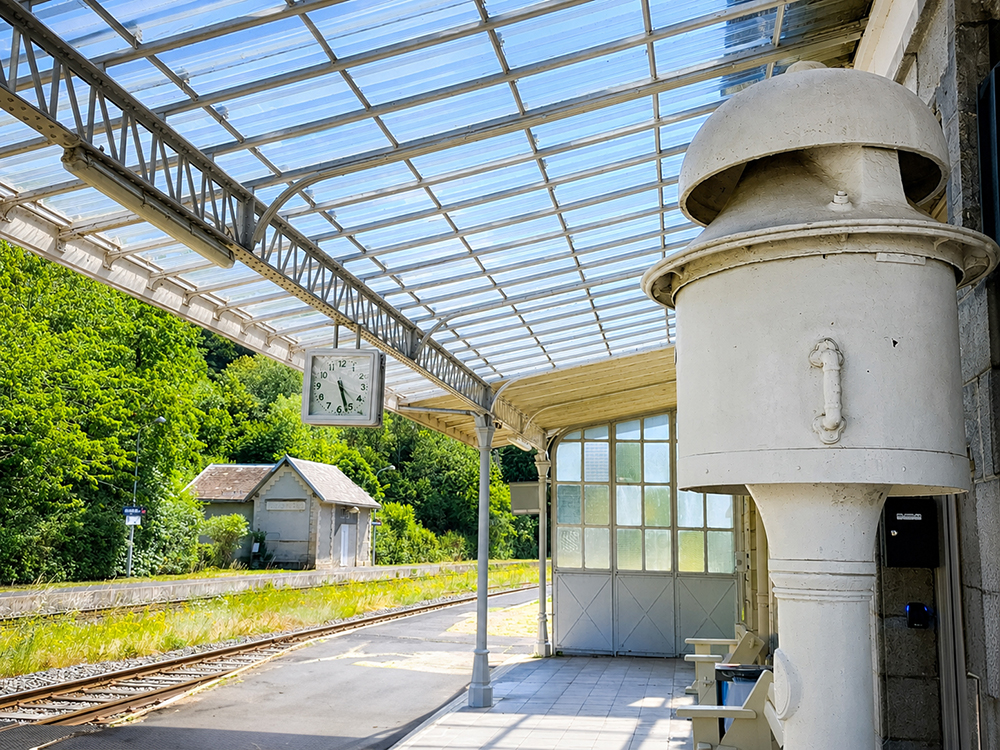
In the late 19th century, the arrival of the railway fuelled the spa town’s growth. Around the station, built in 1868, an entire neighbourhood sprang up, characterised by a distinctive architectural style comprising villas and hotels with elaborate roofs, towers, glass roofs, loggias and terraces, as well as parks and private gardens with neatly trimmed hedges.
Mineral Waters House
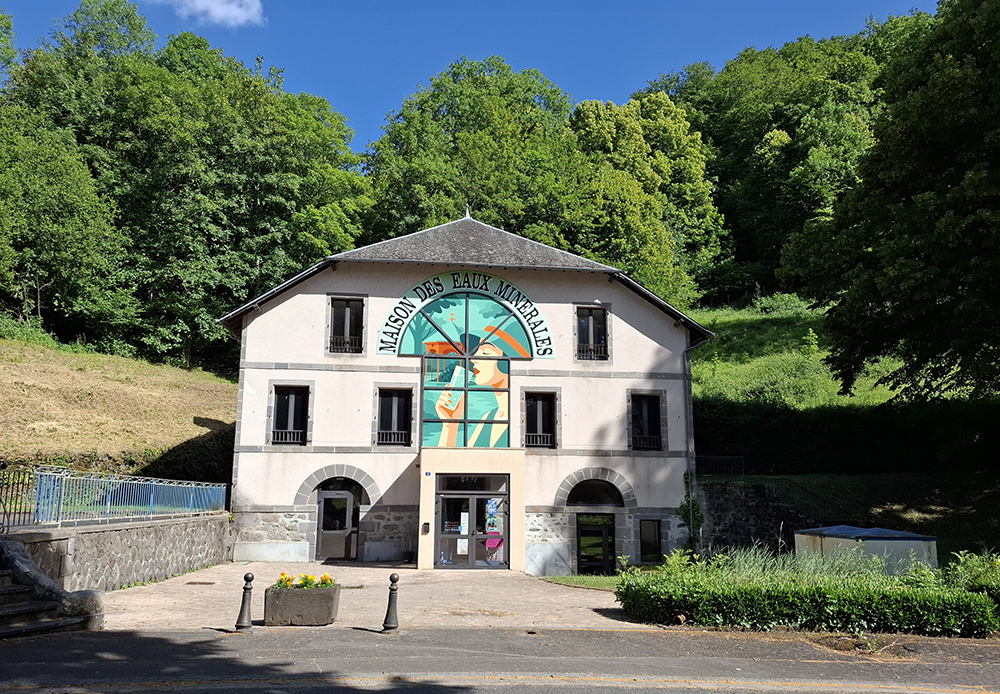
The iron-rich mineral springs of Vic have been prized for their digestive properties since Gallo-Roman times. Having fallen into oblivion, they were rediscovered in 1560 by a young shepherd. In 1648, Louis XIV organised the bottling of the water, making Vic’s waters famous. In the late 19th century, the spa was established. The treatments for spa guests were supervised by doctors: the waters were drunk to treat digestive disorders and states of fatigue. The two world wars curbed the resort’s growth: the spa closed in 1965 and was converted into a museum in 1994.
Spring Park and its Drinking Kiosk
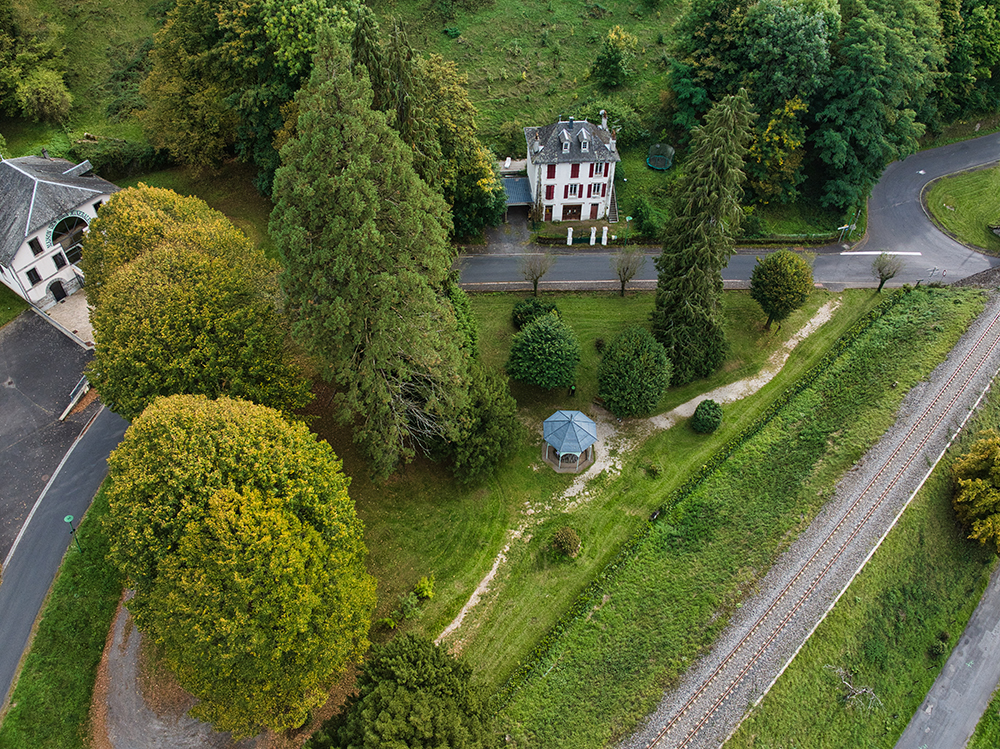
The “drinking kiosk” (fontaine à buveurs) houses the mineral water fountain, whose water is carbonated and rich in iron and bicarbonate, and is always at a constant temperature of 12℃. During the spa treatments, it was served by “water dispensers” (donneuses d’eau). Today, the water poses no health risks, but does not meet drinking water standards. The octagonal kiosk, dating from 1898, is adorned with medallions depicting famous figures who once frequented the site (Queen Margot, Anne of Austria, Ranavalona III). The park is home to an arboretum comprising American tree species such as sequoias, planted in the early 19th century by Arsène Lacarrière-Latour, the urban planner who founded Baton Rouge.
Former Railway Company Hotel
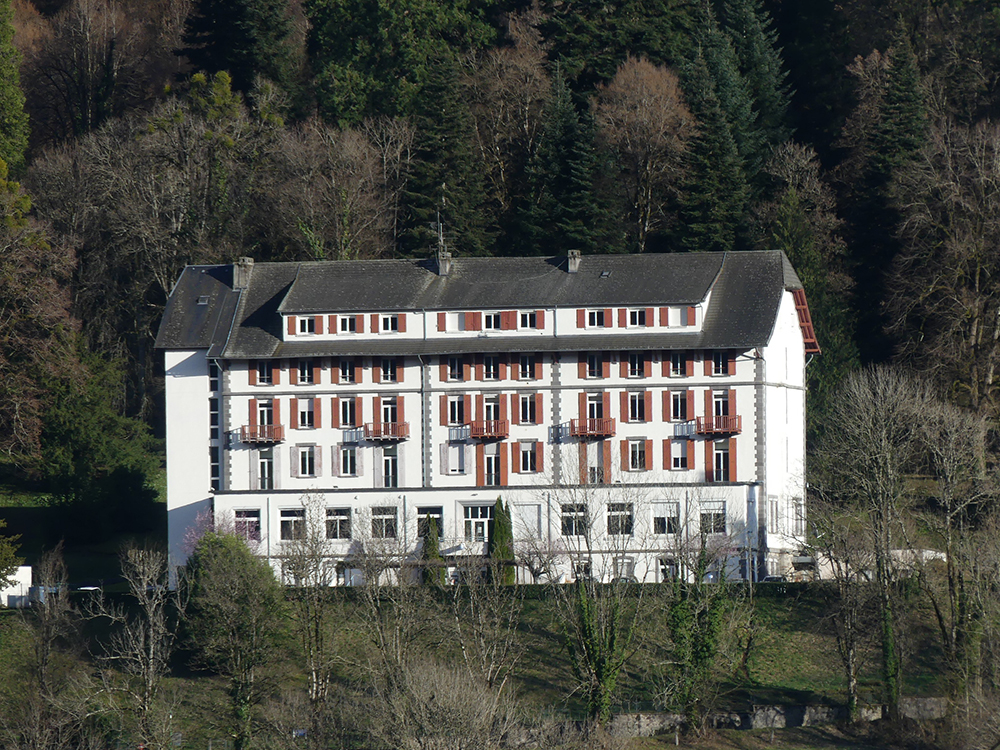
Built upon ministerial decree, the Grand Hôtel de la Compagnie d’Orléans was opened in 1898. The largest hotel in the town of Vic offered all the necessary comforts for a wealthy clientele coming to Vic to take the waters: 55 rooms with electricity generated by the Pas de Cère hydroelectric power plant, drinking water, and a restaurant. In 1903, whilst in exile in France, Queen Ranavalona III of Madagascar stayed there for three weeks. Today, the building houses a healthcare and recovery centre.
Coffinhal House
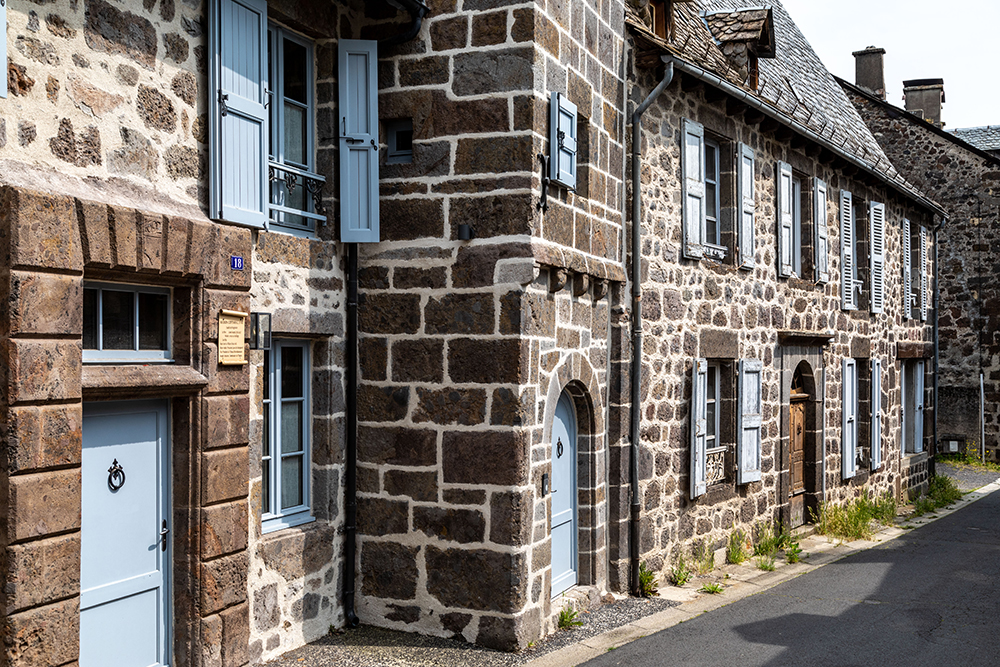
The bossed entrance door bears the date 1692. The house belonged to the Coffinhal family, a distinguished bourgeois family of magistrates in the bailiwick of Vic-sur-Cère. Among its members, the best known is undoubtedly Pierre-André Coffinhal, born in 1762. A lawyer and revolutionary, and a member of the Jacobin Club and the Paris Commune, he very quickly became close to Robespierre. During the events of 1793–1794, he was one of the few to remain loyal to him, which led to his being guillotined without trial on 5 August 1794 (8 Thermidor in the Republican calendar), at the age of 32.
Queen Margot House
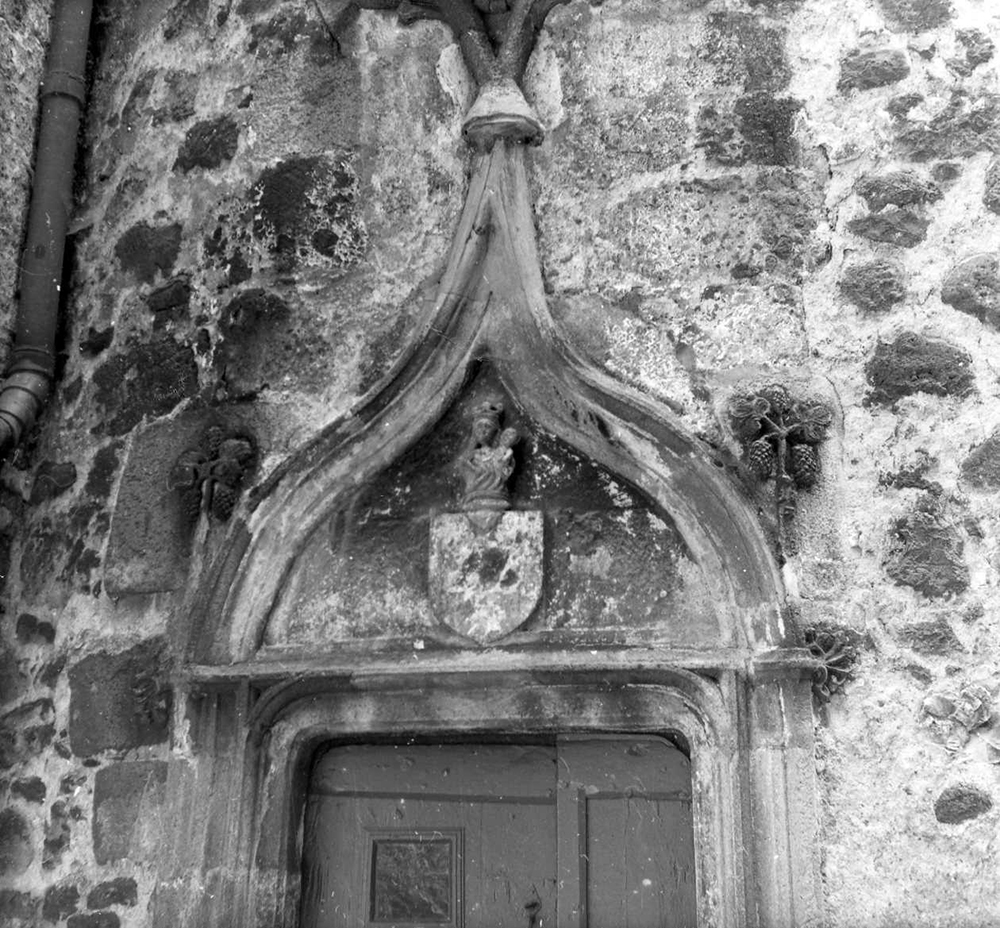
The building is said to bear witness to Queen Margot’s visit to Vic-sur-Cère in 1586. Listed as a Historic Monument, it retains its original walls and a large room on the ground floor featuring a beautiful fireplace. An inner courtyard features a stair turret with a carved entrance door depicting the Virgin and Child – known as the “Blue Virgin” – which was spared from looting during the French Revolution.
Murat-Sistrières House
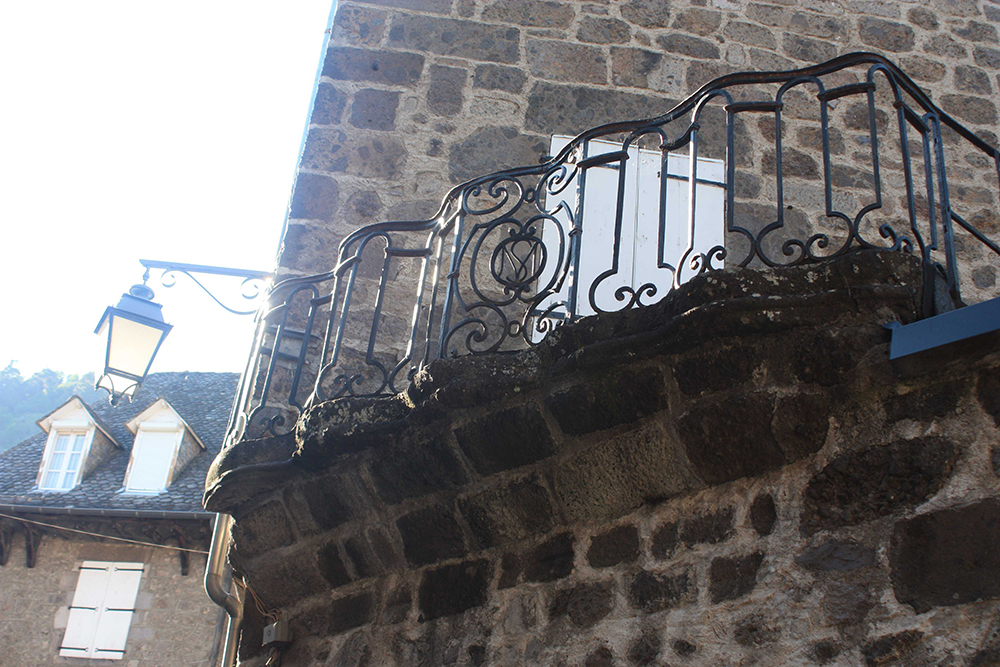
General de Murat-Sistrières was born in this house in 1765. Serving in Napoleon’s army, he distinguished himself as a hero. As a reward, Napoleon appointed him a brigadier-general, then a Baron of the Empire and an Officer of the “Legion of Honour”. This authentic stone house with a lauze roof (stone-tiled) features a beautiful wrought-iron balcony in the Louis XV style bearing the initials of the de Murat-Sistrières family.
De Boissy House
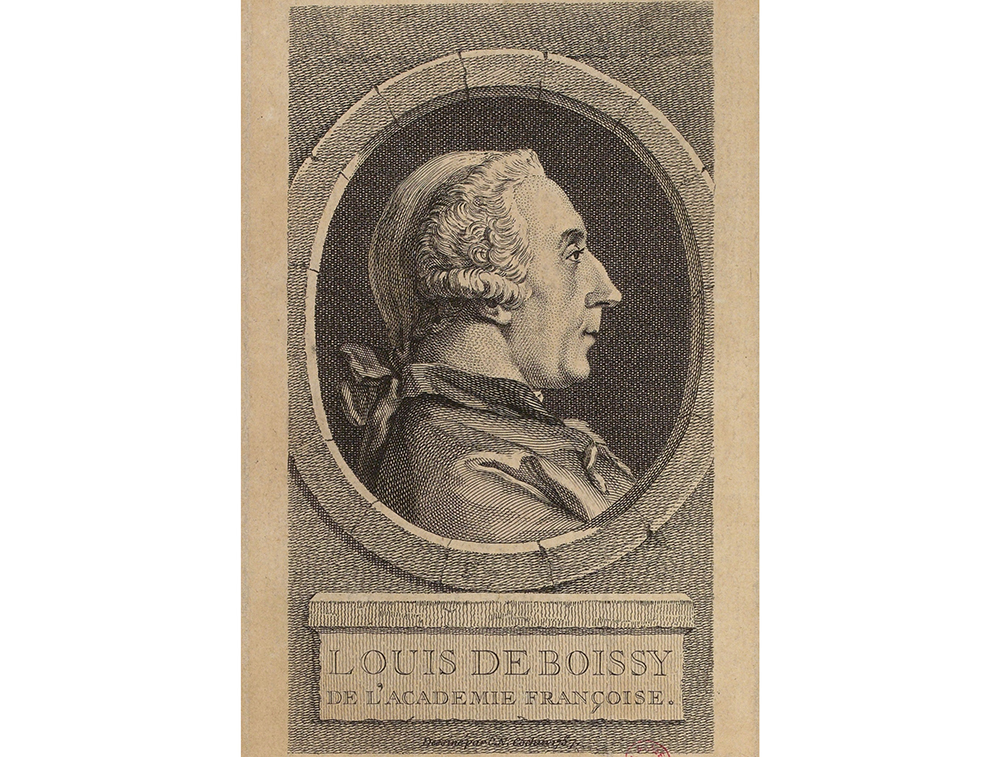
This 15th-century estate belonged to the de Boissy family. This family of magistrates from Vic made a name for themselves thanks to Louis de Boissy , born in 1694. This enfant terrible preferred to have fun rather than pursue the studies imposed on him by his father at the Saint-Flour college. Disinherited, Louis left for Paris in 1721, where he found success. Nicknamed “the Molière of Vic”, at the age of 27 he staged his first play, 'L’amant de sa femme' (“His Wife’s Lover”), a highly successful comedy. Admitted to the Académie Française in 1754, he became editor of the literary journal 'Mercure de France' (engraving from 1757, Musée Carnavalet). He died in 1758, wealthy and covered in honours. His works comprise nine volumes held at the French National Library.
Former Bertrand Foundation
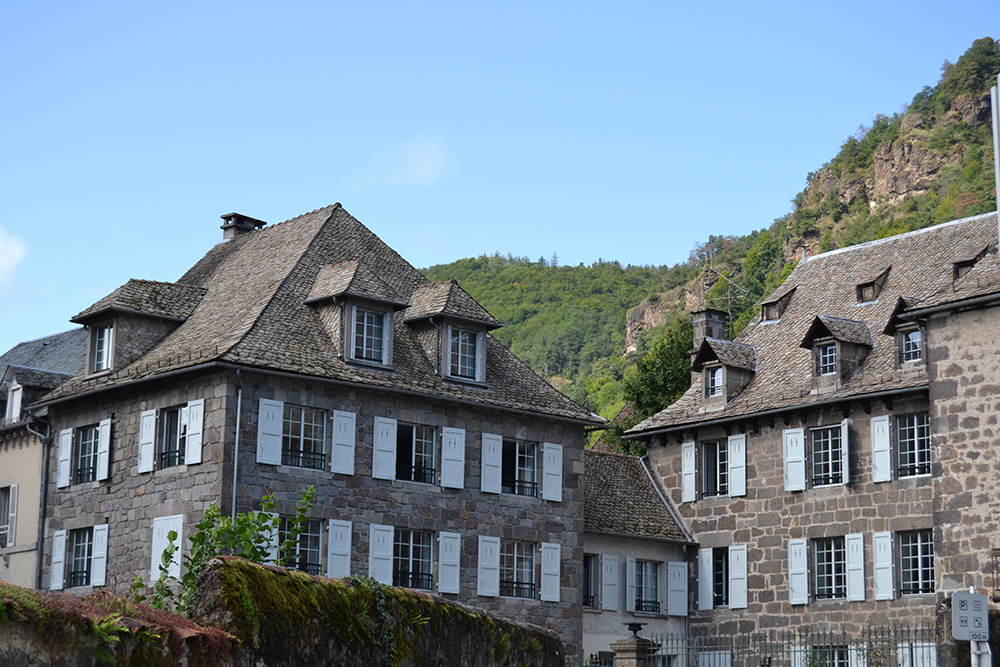
Built from the 17th century onwards, this massive stone building belonged to a prominent family from Vic, the Bertrand family. The first known member, Guillaume, a notary in the 17th century, had numerous descendants who became notaries and lawyers. Gabriel, a judge and notary, died in 1945. His daughter Germaine, the last of this lineage, died without an heir in 1964. She bequeathed all her possessions to the Red Cross, including the building, to be used as a care home, the Fondation Bertrand, which closed its doors in 2014. The building, acquired by the municipality of Vic-sur-Cère in 2021, has since been converted into an intergenerational living space comprising rental accommodation and a nursery for childcare assistants.
Vialard Watermill
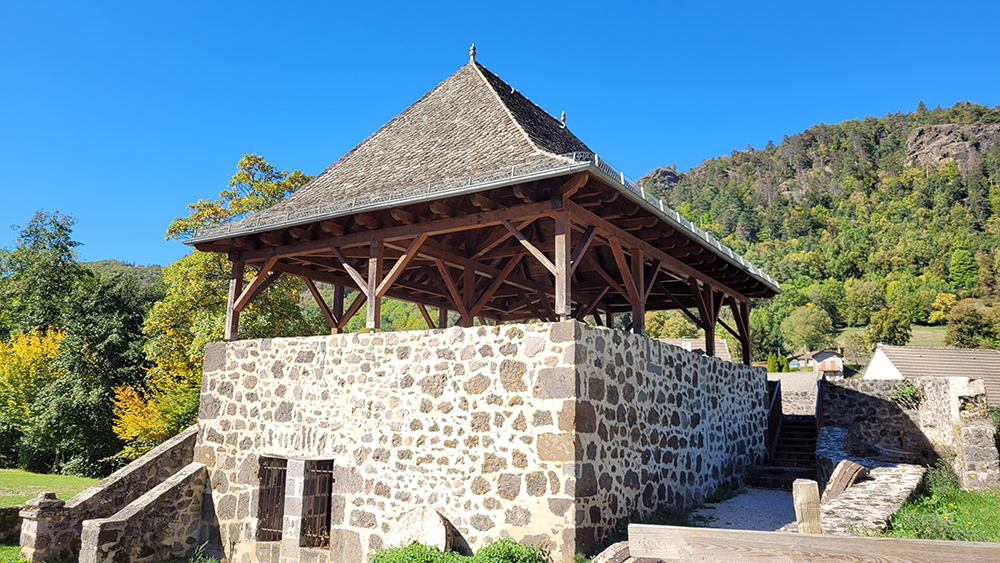
To continue your tour of the town, you can head to the Vialard Watermill, which is a 5-minute walk from the village centre, on Allée des Tilleuls. Thanks to the River Cère and its tributaries, the town once had as many as 14 water mills used to process produce from subsistence farming. The Vialard Mill, first mentioned in 1612, is powered by a millstream from the River Cère. Initially used as a sawmill, its operations diversified to include fruit pressing, oil production, flour milling, wool fulling and carding, dyeing, and even distillation. At its peak, the mill was a genuine small-scale industrial enterprise employing around ten people. The last miller died in the 1960s and the mill fell into disuse. All that remains of the original building is the stone foundation. In 2000, the neighbourhood was designated a flood-prone area and the municipality refitted the mill and its surroundings.
Iraliot and Trou de la Conche Waterfall
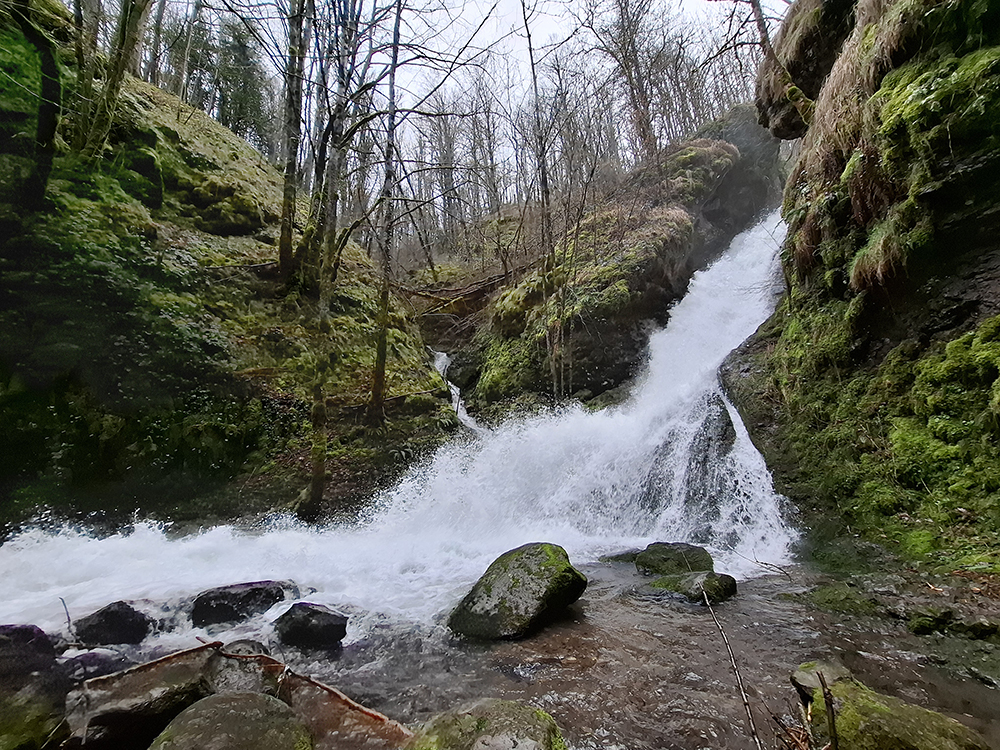
The historic center of the town is crossed by the Iraliot stream, which flows into the Cère at the sports park. It once powered several water mills built along the stream, which can be seen on the Napoleonic land register. It also supplied water to the inhabitants, which it still does today via a collection and storage system in a reservoir visible at the start of the hiking trail at the top of Cap del Lioc Street. The path follows the course of the Iraliot upstream until it reaches the picturesque waterfall at the Trou de la Conche, a site listed as a protected landscape since 1942.
Maurice Delort, ‘Snow Doctor’
Maurice Delort (1911–1971) was an emblematic local figure: a doctor, a county councillor from 1954 to 1971, and deeply committed to the development of tourism in Cantal. He owned Samoyed dogs from Terre Adélie (Antarctica) that had been given to him by polar explorer Paul Emile Victor. These dogs enabled him to make his medical rounds by sled to high-altitude villages, which were sometimes cut off by snow for several months. Affectionately nicknamed “the Bearded One,” this doctor was known for his charisma and compassion, and he treated patients tirelessly, no matter the circumstances. A bronze bust honors his memory in front of the mini-golf course he helped establish. This mini-golf course was built in 1956, with each hole featuring a model of a must-see site in the Cantal region. At the entrance, a stone kiosk was built in 1963, inspired by the dovecote at La Prade (1768).
Sports Park and André Mercier Avenue
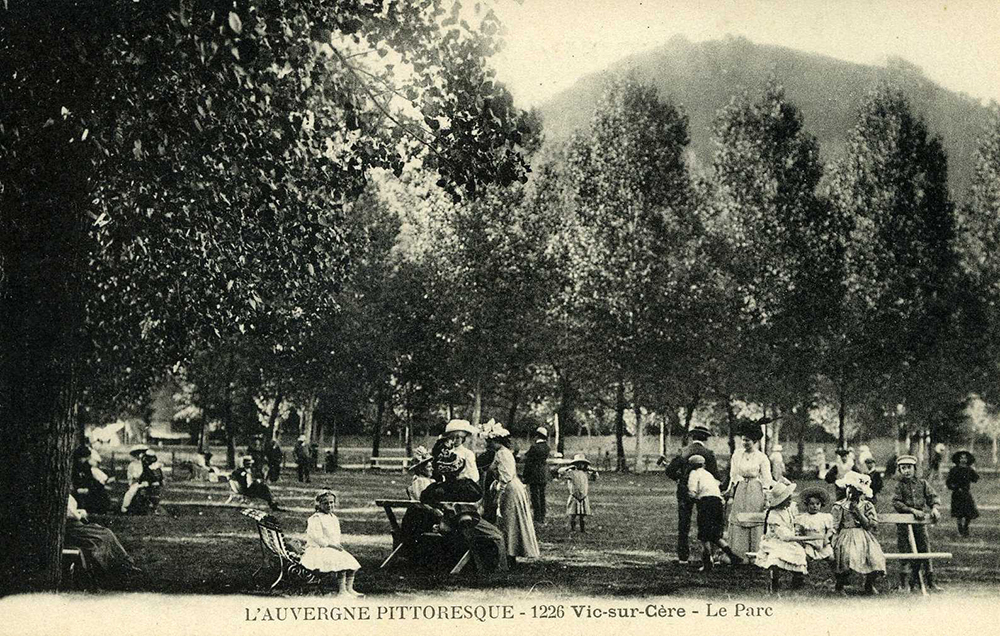
The park was designed as early as 1933 with a swimming pool and tennis courts, making it the first in the Cantal department to feature such facilities. Its creation was the result of an initiative by Dr. Jean Lambert (1892–1954), a local figure dedicated to the development of sports and tourism. In 1949, he had numerous trees planted in the park and had it fenced in. As the organizer of the Aurillac-Vic walking race, he was a promoter of sports, tourism, and community activities in town. The adjacent avenue is named in honor of André Mercier, mayor of Vic-sur-Cère from 1959 to 1969. It is distinguished by its remarkable double row of century-old linden trees. During the heyday of the spa town, several rows of trees were planted along the banks of the Cère River and along the town’s main roadways. These rows structure the landscape and create a link between the different neighbourhoods.
Touring Club Hotel
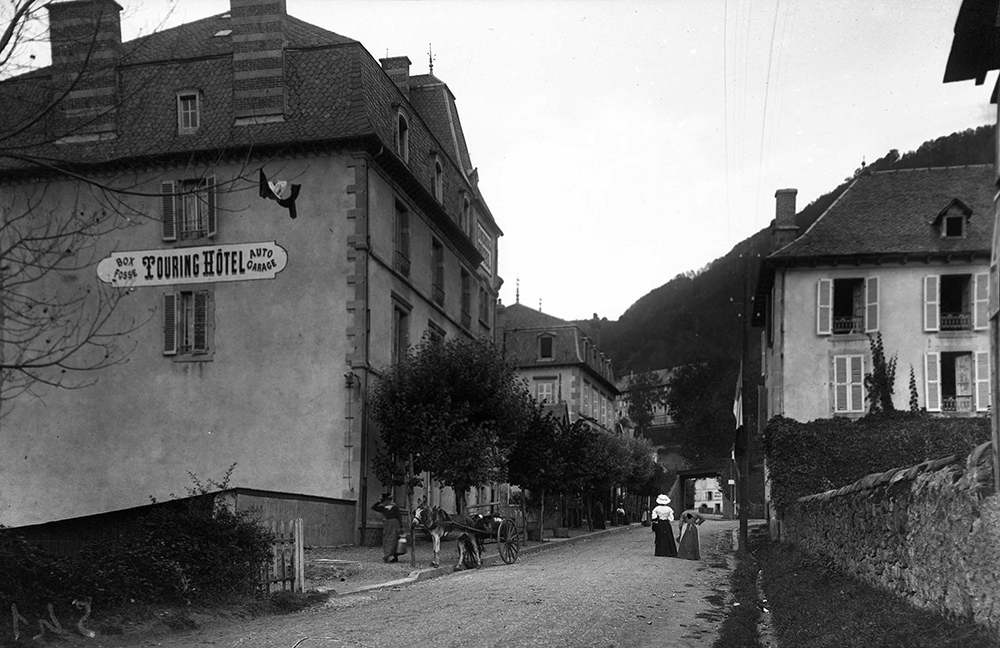
The former Touring Club Hotel has a special history dating back to the Second World War, having housed a children’s home founded in May 1942 by Father Glasberg. Born into a Jewish community in Zhytomyr (Ukraine), he spoke fluent Yiddish and French, and devoted himself to rescuing people fleeing Nazi persecution. The children’s home, run by the Malkin couple, welcomed Jewish teenagers rescued from camps in the south of France by Father Glasberg. The town clerk at the time, Roger Bonhoure, also helped to save the residents of the Touring Club Hotel and members of the Resistance by providing them with false identity papers. As a friend of the Malkins, he helped the couple to flee when their Jewish origins were revealed. In 2001, the Yad Vashem Institute in Jerusalem awarded Roger Bonhoure the title of “Righteous Among the Nations”.

Ce projet de carte interactive est porté par les associations Petites Cités de Caractère® de France, Petites Cités de Caractère® en Auvergne Rhône Alpes, Petites Cités de Caractère® du Cantal et par la commune de Vic-sur-Cère.
Il est soutenu financièrement par la convention FNADT du Commissariat Massif Central, par l'appel à projet "patrimoine et numérique" de la Région Auvergne Rhône-Alpes, et par la Fondation d’Entreprises du Crédit Agricole Centre France.
Le plan de la commune (visuel de fond) a été réalisé par Laura Catheline - atelier passage avec des bulles illustratives dessinées par Emma Delaume.
Les traductions en anglais ont été réalisées par l'Office de tourisme de la Châtaigneraie Cantalienne.
Les voix ont été produites et enregistrées par Hélène Poussin - Compagnie « les pieds bleus » (version française), Nico productions (version anglaise).
Les photos ont été produites et réalisées par Pierre Soissons, Patrick Forget, Antom Productions, Mairie de Vic-sur-Cère, Petites Cités de Caractère®, Kargo Sud, Archives Départementales du Cantal.
Les vidéos ont été produites et réalisées par Petites Cités de Caractère®, l'une d'entre elles est aimablement fournie par la famille Delort.
Conception et développement de la carte interactive par Tabula Rasa.




Ce projet de carte interactive est porté par les associations Petites Cités de Caractère® de France, Petites Cités de Caractère® en Auvergne Rhône Alpes, Petites Cités de Caractère® du Cantal et par la commune de Vic-sur-Cère.
Il est soutenu financièrement par la convention FNADT du Commissariat Massif Central, par l'appel à projet "patrimoine et numérique" de la Région Auvergne Rhône-Alpes, et par la Fondation d’Entreprises du Crédit Agricole Centre France.
Le plan de la commune (visuel de fond) a été réalisé par Laura Catheline - atelier passage avec des bulles illustratives dessinées par Emma Delaume.
Les traductions en anglais ont été réalisées par l'Office de tourisme de la Châtaigneraie Cantalienne.
Les voix ont été produites et enregistrées par Hélène Poussin - Compagnie « les pieds bleus » (version française), Nico productions (version anglaise).
Les photos ont été produites et réalisées par Pierre Soissons, Patrick Forget, Antom Productions, Mairie de Vic-sur-Cère, Petites Cités de Caractère®, Kargo Sud, Archives Départementales du Cantal.
Les vidéos ont été produites et réalisées par Petites Cités de Caractère®, l'une d'entre elles est aimablement fournie par la famille Delort.
Conception et développement de la carte interactive par Tabula Rasa.